Fannie Mae’s Rent-Seeking Empire Expands
Jeffrey Birnbaum, who covers lobbyists for the Washington Post, reports:
Lorraine A. Voles, until recently communications director for the congressional office of Sen. Hillary Rodham Clinton (D-N.Y.), has joined Fannie Mae as a senior vice president.The move is a reunion of sorts. Voles, who was communications director to Al Gore when he was vice president, worked previously at the public relations firm Porter Novelli. There, her boss was Charles V. Greener, who is now Voles’s boss at Fannie Mae.Greener had been the mortgage finance giant’s senior vice president in charge of communications and is now chief of staff to Fannie Mae chief executive Daniel H. Mudd. Voles is taking his old job. Before he joined Porter Novelli, Greener was a spokesman for the Republican National Committee.
That’s right: A former mouthpiece for Clinton and Gore is working quite happily for a former GOP spokesman — for a second time. Only in Washington.
One big happy family here in the Imperial City. Those who are paid to fight the red-blue wars, fight. Those who are paid to lobby both sides against the taxpayers, lobby. And as the McCain campaign is demonstrating, the most effective players can switch roles on a moment’s notice.
It’s relevant to note that Ms. Voles and Mr. Greener are now working for Fannie Mae, one of the most skilled rent-seekers in Washington and a pioneer in hiring top players from both parties. As a Cato study noted a few years ago, “The special governmental links that apply to Fannie Mae and Freddie Mac yield little that is socially beneficial, while creating significant potential social costs.” And as an earlier Cato study (by financial analyst Vern McKinley, now a candidate for Congress) noted, “Fannie Mae and Freddie Mac preserve their privileged status through a multi-million-dollar lobbying effort that includes massive ’soft money’ campaign contributions and the payment of exorbitant salaries to politically connected executives and lobbyists.” Ten years later, that’s still the bottom line.
Posted on May 21, 2008 Posted to Cato@Liberty
No Majority Yet
The banner headline across the top of this morning’s Washington Post is
Obama Takes Delegate Majority
But that isn’t true. As the story itself (and the online headline) correctly said, Sen. Barack Obama is now “claiming a majority of the pledged delegates at stake.” His campaign is doing a great job of getting the media to declare that a “milestone” and a “major victory.” But in fact it tells us nothing we didn’t know already: Obama is ahead of Sen. Hillary Clinton in the race, and it seems impossible for Clinton to catch up. But “a majority of the pledged delegates” is virtually meaningless. There are several kinds of delegates that make up the convention, and you have to get a majority of all the delegates. “A majority of the pledged delegates” is no more relevant than Obama claiming “a majority of the delegates from coastal states” or Clinton claiming “a majority of the white delegates.” (I don’t actually know if either candidate has those majorities.) When Obama produces a list of 2025 delegates pledged to vote for him, it will be time for the Post to drag today’s headline out again.
Nothing to see here, folks. Move along. Just a little campaign bombast.
Posted on May 21, 2008 Posted to Cato@Liberty
Harold & Kumar Discover the Spirit of America
Four years ago the movie Harold & Kumar Go to White Castle was celebrated mostly as a “stoner” movie: smart young Asian guys smoke pot and get the munchies. When I finally got around to watching it, it was funnier than I expected. And very near the end of the movie, after an all-night road trip in which they encountered more obstacles than Odysseus, when Harold finally gives up and says he can’t make the last leg of the epic journey to White Castle, came this wonderful speech from Kumar:
So, you think this is just about the burgers, huh? Let me tell you, it’s about far more than that. Our parents came to this country, escaping persecution, poverty and hunger. Hunger, Harold. They were very, very hungry. They wanted to live in a land that treated them as equals, a land filled with hamburger stands. And not just one type of hamburger, okay? Hundreds of types with different sizes, toppings, and condiments. That land was America! America, Harold! America! Now this is about achieving what our parents set out for. This is about the pursuit of happiness. This night . . . is about the American Dream! Dude, we can stay here, get arrested, and end our hopes of ever going to White Castle. Or, we can take that hang glider and make our leap towards freedom. I leave the decision up to you.
Escaping persecution, poverty and hunger . . . to find ample food and unlimited choices . . . the pursuit of happiness . . . the American Dream. Yes, I think writers Jon Hurwitz and Hayden Schlossberg were on to something.
And now comes the sequel, Harold & Kumar Escape from Guantanamo Bay. After another improbable road trip, the fugitive youths literally drop in on George W. Bush’s Texas ranch. In the increasingly fantastic plot, the president invites them to join him in hiding from the scary Cheney, shares his pot with them, and then promises to clear up the unfortunate misunderstanding that landed them in Guantanamo Bay. An uninhibited but still skeptical Kumar says, “I’m not sure I trust our government any more, sir.” And President Bush delivers this ringing libertarian declaration:
Hey, I’m in the government, and I don’t even trust it. You don’t have to trust your government to be a patriot. You just have to trust your country.
Harold & Kumar: more wisdom than a month of right-wing talk radio. Hurwitz and Schlossberg get what America is about.
Posted on May 12, 2008 Posted to Cato@Liberty
Politics Corrupts Everything
The president of West Virginia University, Michael Garrison, is hanging on after the school’s faculty voted 77 to 19 to demand his resignation. Faculty members are outraged that Garrison retroactively awarded an MBA to a friend, who is the daughter of Gov. Joe Manchin III. The Washington Post reports:
Garrison’s critics note that he is a former classmate of Bresch’s. He once worked as a lobbyist for Mylan Inc., where Bresch is an executive and whose chairman is one of WVU’s biggest donors. They also note that Garrison was chief of staff for former West Virginia governor Bob Wise (D).
The Post failed to add the detail that Garrison served on Manchin’s transition team when he succeeded Wise. So yes, when you hire a lobbyist and political operator to run a university, you can expect some favors for politically connected friends.
Posted on May 8, 2008 Posted to Cato@Liberty
Genuine Unsolicited Testimonial for Cato University
Bill Eilberg, a Club for Growth member who attended Cato University last year, sent this review into the Club blog:
I’m not one who easily sits through lectures, but at Cato University, I can honestly tell you that my attention span was at its highest level, as I listened more intently than I ever had done in college or law school.
I note that Rob McDonald is on the faculty again this year. Rob is one of the most talented speakers one will ever hear. His discussions on American history are positively riveting. I will never forget listening to his poignant account of how George Washington quelled a potential revolt by his officers, taking out his reading glasses to quote from a text (it is a story you may have heard already, but Rob is a master at retelling it). If I had the opportunity, I could listen to him for hours.
Bill is certainly right. Cato University gets rave reviews every year. Once again this July, it will be held at the beautiful Rancho Bernardo Inn near San Diego. Speakers will include Tom Palmer, Peter Van Doren, Gene Healy, and Michael Cannon of Cato. Reporting from around the world will be former Putin adviser Andrei Illarionov, German economist Karen Horn, elcato.org editor Gabriela Calderon, and Zimbabwean opposition leader Rejoice Ngwenya. And reporting from 1776, the aforementioned Professor McDonald.
Posted on May 6, 2008 Posted to Cato@Liberty
Blinded by Ideology
A letter writer in the Washington Post complains about this Post editorial, which criticized the repression in Cuba, particularly the lack of freedom of expression and the right to emigrate. The writer declares,
Cuba is managing its economy and is making incremental changes and reforms within its socialist and human-needs-oriented system. The U.S. government and The Post shouldn’t lecture Cuba when we have our own problems with the economy, the budget, health care, infrastructure and our moral standing in the world.
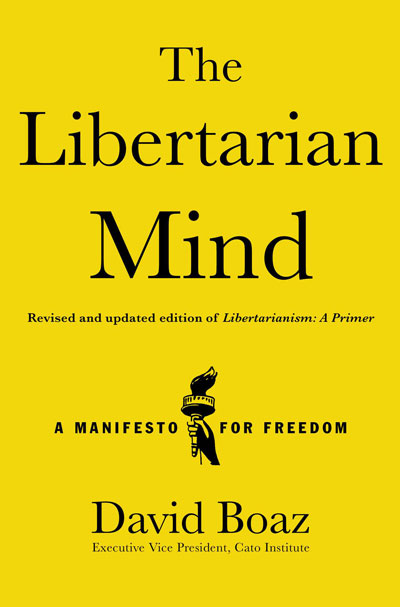
I’ve just published a book, most of whose 300 pages are devoted to criticisms of the U.S. government on a far wider range of issues than that, so I’m no knee-jerk defender of any government, much less of the Bush administration. But let’s take a closer look at the writer’s claims:
Cuba is managing its economy…
Well, every country manages its economy in some sense. The Cuban government has managed to turn a beautiful country of tropical beaches 90 miles from North America into one of the poorest countries in the world.
…and is making incremental changes and reforms…
Yes, as the Post editorial noted:
In the past few weeks, Cuban President Raúl Castro has introduced a handful of micro-reforms to the oppressive and bankrupt regime left behind by his brother. Cubans are now officially allowed to buy cellphones, computers and microwave ovens; state workers may get deeds to apartments they have been renting for decades; and farmers may be able to sell part of what they grow at market prices. The measures won’t have much impact (though they have evidently annoyed the officially retired Fidel Castro): The vast majority of Cubans can’t afford to buy electronic goods, and the agricultural reforms fall short of steps taken years ago by North Korea.
So reforms are good. Wake me when they reform more than North Korea.
Posted on May 2, 2008 Posted to Cato@Liberty
Deborah Jeane Palfrey, Hounded to Death
Faced with the prospect of years in prison, Deborah Jeane Palfrey, known as the “D.C. Madam,” committed suicide on Thursday. Her pursuers and prosecutors should be ashamed of themselves.
Running a house of prostitution is not a distinction most of us would wish for our daughters. But it’s a vice, not a crime. That’s a crucial distinction in a free society. So far as we know, she never murdered, raped, assaulted, robbed, or defrauded anyone. Like any broker, she brought together willing buyers and willing sellers. And for doing so, she was convicted–not actually of prostitution but of “racketeering” and money laundering–and faced up to 55 years in prison, though prosecutors estimated that her sentence would likely be “only” four to six years.
Palfrey was indicted after a three-year joint investigation by the Internal Revenue Service and U.S. Postal Service. Apparently they couldn’t catch her cheating on her taxes, but her employees mailed her cut of the proceeds in money orders, which led to racketeering and money laundering charges. As with former New York governor Eliot Spitzer, apparently a fishing expedition into money matters turned up something far more headline-worthy.
But really–a three-year investigation of a prostitution service? Are there no real criminals? Are there no terrorists? Before, during, and after 9/11, the Justice Department ran a 13-month investigation of a brothel in New Orleans. At least 10 FBI agents were involved. As Jonathan Turley noted, “Only the FBI could go to the French Quarter and find only a dozen prostitutes after a year of investigation. Given the roughly one-to-one ratio between agents and prostitutes, the FBI could have produced a hundred times this number by simply having agents walk down Bourbon Street.” What a ridiculous waste of money and manpower.
But the waste is not the worst aspect of this outrage. Even if there were no criminals and no terrorists to hunt down, it would be wrong to harass, arrest, prosecute, imprison–and hound to death–people who are violating no one’s rights.
There’s a nightmarish intersection of old prostitution laws and modern financial regulations. Palfrey was investigated on suspicion of tax evasion and then convicted of “racketeering” and “money laundering.” But she was no racketeer; she was one woman with some employees or contract workers. Spitzer’s bank accounts were being monitored, as apparently all our bank accounts are, under post-9/11 laws allegedly designed to turn up evidence of terrorist financing or other nefarious activity. And boy, did they find something sinister–a married man having sex with prostitutes.
In many ways we are more free today than we were in previous decades. But new regulations and new technology are making it much easier to monitor our activities and to actually enforce both old and new laws. It’s like a silent police state that we only realize when we’re suddenly served with papers.
Palfrey told journalist Dan Moldea, “I’m not going back to jail. I’ll kill myself first.” A woman who had worked for her had also committed suicide after being charged with prostitution in 2007.
It’s time to repeal these antiquated laws against prostitution and to take a close look at the use and abuse of racketeering, money laundering, bank monitoring, and other intrusive laws. Someone needs to step forward and start that debate. Perhaps Governor Spitzer and Sen. David Vitter would be good candidates.
In the meantime, may Deborah Jeane Palfrey rest in peace. And may her persecutors have many sleepless nights.
Posted on May 2, 2008 Posted to Cato@Liberty
Hillary and the imperial presidency
US elections 2008: Clinton’s promise to curtail executive power and restore checks and balances is belied by her record
Posted on April 30, 2008 Posted to The Guardian
Hillary and the imperial presidency
US elections 2008: Clinton’s promise to curtail executive power and restore checks and balances is belied by her record
In a speech to newspaper editors earlier this month, senator Hillary Clinton denounced the “imperial presidency” of George Bush and promised to pursue a different course if she becomes president.
But that promise is hardly more believable than her claims to have dodged sniper fire in Bosnia.
Clinton’s primary case for her candidacy is her White House experience during the presidency of her husband. And those years were marked by expansions of federal and executive power, secrecy and claims of executive privilege.
In her campaign she says that she would “restore the checks and balances and the separation of powers”. But back in 2003, she told ABC’s George Stephanopoulos: “I’m a strong believer in executive authority. I wish that, when my husband was president, people in Congress had been more willing to recognise presidential authority.” She encouraged President Clinton to intervene in Haiti and Bosnia and to bomb Serbia, all without congressional authorisation.
In the case of the bombing of Serbia, Congress actually took a vote. The House of Representatives refused to authorise the air strikes, but the Clinton administration “sort of just blew by” that technicality, in the words of a White House spokesman.
President Clinton also ordered air strikes on Afghanistan, Sudan and Iraq, all without congressional approval. That’s practically the definition of an imperial president, and it sharply undermines Hillary Clinton’s statement in this campaign that “I do not believe that the president can take military action – including any kind of strategic bombing – against Iran without congressional authorisation.”
The Clinton administration also vastly expanded the use of executive orders to usurp Congress’s lawmaking powers. President Clinton used executive orders to nationalise millions of acres of land, impose pro-union rules that Congress wouldn’t pass, strengthen the federal government’s hand in disputes over federalism, self-authorise his military actions in Yugoslavia and more. The most succinct and pointed defence of his unilateral legislating came from White House aide Paul Begala: “Stroke of the pen. Law of the land. Kind of cool.”
As William Olson and Alan Woll pointed out in a 1999 Cato Institute study, President Clinton often legislated through an even more obscure vehicle than executive orders. “Several of President Clinton’s major policy actions, for which he has been severely criticised, were accomplished not through formal directives but through orders to subordinates, or ‘memoranda’. Those include his ‘don’t ask, don’t tell’ rule for the military; his removal of previously imposed bans on abortions in military hospitals, on foetal tissue experimentation, on Agency for International Development funding for abortion counselling organisations and on the importation of the abortifacient drug RU-486; and his efforts to reduce the number of federally licensed firearms dealers.”
In another Clinton-era study, Timothy Lynch took the administration to task for its warrantless searches and wiretapping, its unauthorised military actions and its legal claim that the federal government has “plenary powers” to legislate on any matter, notwithstanding the limitations imposed by the Constitution.
Senator Clinton told the newspaper editors: “I will restore openness in government. When I am president, the era of Bush/Cheney secrecy will be over.” But the Clinton administration fought in court to keep secret the names of those who participated in first lady Hillary Clinton’s task force on healthcare reform. And Bill Clinton repeatedly claimed executive privilege to resist investigations by Congress and independent counsels into his pardons of Puerto Rican terrorists, his perjury in the Monica Lewinsky case and other matters. In his battles with independent counsel Kenneth Starr, Clinton became the first president since Watergate to take a claim of executive privilege to court and lose. “Openness” is not a quality the Clintons have been noted for.
The big problem with Hillary Clinton’s promise to be a less imperial president is her expansive conception of the role of the federal government in society. Clinton wants the federal government to have vast powers to do good as she sees it. She told the newspaper editors: “I believe in the power of the presidency to set big goals for America and to solve the problems of Americans, to ensure that our people have the tools they need to turn challenges into opportunities, to fulfil their God-given potential and to build better lives for themselves and their children.”
At other times she has proclaimed herself a “government junkie”, promised to devote herself to “redefining who we are as human beings in the post-modern age” and declared that her administration would help Americans to “quit smoking, to get more exercise, to eat right, to take their vitamins”.
Any president who views the federal government as a vast, sprawling nanny, a nurturing mother for every adult, is going to view resistance to her plans as an affront to decency. And as President Bill Clinton demonstrated, if Congress won’t act or votes against the president’s policies, the president must act in the name of all the people to give the people what they need. Aggrandisement of presidential power has consistently gone along with growth in the size, scope and power of the federal government.
The latest Washington Post-ABC News poll shows that only 39% of Americans regard Hillary Clinton as “honest and trustworthy”. It’s hard to imagine that even 39% of voters would believe her promise to restore checks and balances and reduce the power of the office she seeks to occupy.
For more blogs on the US elections, click here.
For more US election coverage, click here.
Posted on April 30, 2008 Posted to Comment,Comment is free,George Bush,guardian.co.uk,Hillary Clinton,The Guardian,US politics
Hillary and the imperial presidency
US elections 2008: Clinton’s promise to curtail executive power and restore checks and balances is belied by her record
Posted on April 30, 2008 Posted to The Guardian



 RSS
RSS